Get a $20 World Cup Free Bet — No Deposit Required
Neymar Confirmed for World Cup 2026: Brazil Star Gets Final Chance at the Sixth Star
Published May 19, 2026 · 11 min read
The chants began outside the Museu do Amanhã in Rio de Janeiro hours before Carlo Ancelotti walked to the podium. According to reports from Sports Illustrated, crowds gathered on the waterfront, holding banners and singing the name that has defined Brazilian football for more than a decade. "Olé, Olé, Olé, Olá, Ney-mar! Ney-mar!" One sign, written in Portuguese and photographed by SI, captured the sentiment of the moment: "Neymar with one leg and one eye is better than all the players in the Seleção." Another, more directly: "Ancelotti, call up Neymar."
The Italian coach did not disappoint them.
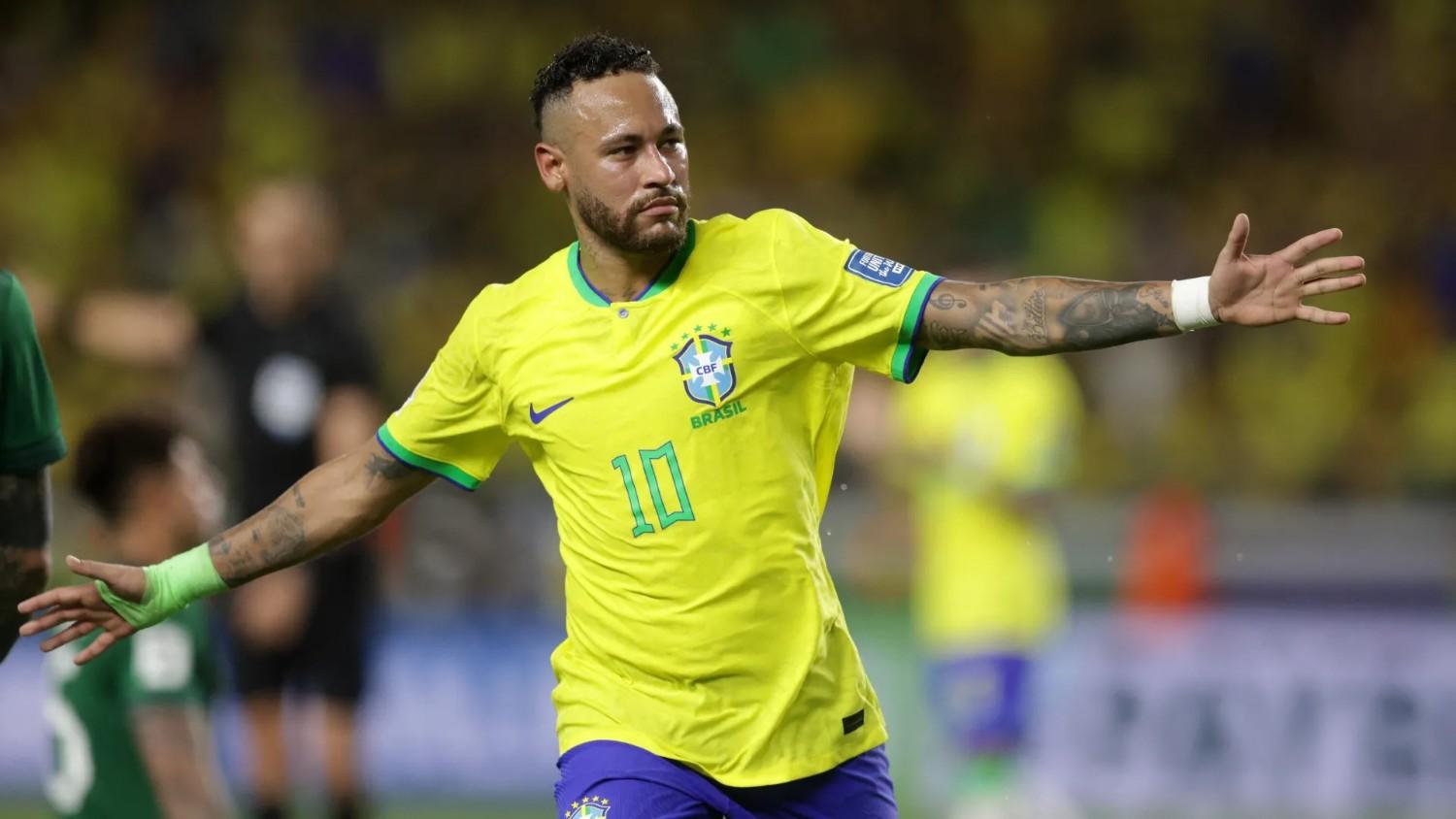
On Monday, May 18, 2026, Ancelotti officially named Neymar to Brazil's 26-man squad for the 2026 FIFA World Cup. After nearly three years away from the Seleção, after a torn anterior cruciate ligament and a Saudi Arabian exile that many believed had ended his international career, Brazil's all-time leading scorer is heading back to the World Cup. For the 34-year-old, who has not worn the iconic yellow shirt since being carried from the pitch in tears against Uruguay in October 2023, it will be a fourth World Cup — and almost certainly his last.
It is one of the most important storylines of Brazil's tournament build-up, and it changes the conversation around a team chasing its sixth title.

The Announcement Brazil Held Its Breath For
The scene in Rio was extraordinary. Inside the Museu do Amanhã, players and football officials gathered for what was officially a squad announcement but had, in the days leading up to it, become a national event. Cameras tracked the crowd outside as much as the podium. The question dominating Brazilian sports media for months was not whether the Seleção could win a sixth World Cup title, but whether their most famous footballer would be there to help them try.
Ancelotti, who took charge of Brazil in May 2025, had been notably non-committal. Neymar was omitted from March's friendlies against France and Croatia, and the manager had publicly stated that only players at "100% physical capacity" would be considered for selection. For many, that sounded like the gentle closing of a door.
It now appears the door was kept open longer than anyone realised.
"We spent the entire year analysing Neymar," Ancelotti told reporters after revealing the squad. "We realised that in this last period he had continuity and was in good physical condition. He has experience in this kind of competition, the love of our group; he can create a better environment in this group. We chose Neymar not because we think he'll be a good substitute. He will be an important player in this World Cup."
The remarks were carefully chosen. Ancelotti was not framing Neymar's inclusion as sentimental or symbolic. He was, instead, signalling that he expects the forward to contribute meaningfully — perhaps even start — when Brazil opens its campaign against Morocco at MetLife Stadium on June 13.
The Road Back From October 2023
To understand the weight of Monday's announcement, you have to return to the moment everything changed for Neymar. On October 17, 2023, in a World Cup qualifier against Uruguay in Montevideo, the forward collapsed in tears after his left knee gave way. The diagnosis was devastating: a torn ACL with additional meniscus damage, requiring extensive surgery and a recovery period of more than a year.
What followed was a chapter of his career that many had quietly written off. Neymar had joined Saudi Arabian club Al-Hilal in August 2023 in a transfer that, while financially staggering, removed him from the highest level of European competition. He played just two months for the club before the Uruguay injury. He did not play another competitive match for them. The Saudi Arabian period became defined less by performances than by absence.
In January 2025, after Al-Hilal declined to extend his contract, Neymar returned to Santos — the Brazilian club where he had emerged as a teenager and where, fifteen years earlier, he had announced himself as a generational talent. The move was framed as a homecoming. It was also, for many observers, a final farewell to the global stage.
The Santos return was not always smooth. There were flashes of the old Neymar — moments of dribbling brilliance, decisive passes, the occasional reminder of why he had been considered the heir to Pelé. But there were also concerns. Fitness issues lingered. Substitutions sparked controversies. Just days before Ancelotti's squad announcement, Neymar was visibly upset after being substituted in Santos's 3-0 defeat to Coritiba — a moment captured by cameras and dissected in Brazilian media as evidence that his preparation for the World Cup was anything but ideal.
And yet, here he is.
Why Neymar's Return Matters
Neymar's inclusion is not just another squad decision. It is the return of Brazil's all-time leading scorer to the country's biggest stage after an absence that seemed, at times, to be moving towards a quiet international ending.
He has played in three previous World Cups: 2014, 2018, and 2022. Each tournament left a different scar. In 2014, he was Brazil's central figure until a back injury ruled him out of the semi-final, where the hosts suffered the historic 7-1 defeat to Germany. In 2018, he arrived as one of the tournament's most discussed players but Brazil were eliminated by Belgium in the quarter-finals. In 2022, he scored a brilliant extra-time goal against Croatia, only to watch Brazil exit on penalties before he could take his own.
That history explains why this fourth World Cup carries so much weight. Neymar's international career has been full of records, moments, and individual brilliance, but the World Cup has remained painfully out of reach. For many Brazilian supporters, his legacy with the Seleção still feels unfinished.
Ancelotti's Calculation
The decision to include Neymar reveals something about how Ancelotti has chosen to manage this squad. Brazil are not lacking in attacking talent. Vinícius Júnior, winner of the FIFA Best Men's Player award and a Champions League scorer for Real Madrid, leads the line. Raphinha had a brilliant 2025-26 season at Barcelona. Matheus Cunha provides power and goals from the Premier League with Manchester United. Endrick, just 19, earned a first World Cup call-up after a productive loan spell at Lyon. Gabriel Martinelli, Igor Thiago, Luiz Henrique, and Bournemouth's 18-year-old prodigy Rayan complete a forward line of depth and youth.
There was no obvious tactical need to include a 34-year-old recovering from a major knee operation. What Ancelotti has chosen, instead, is leadership. Experience. A dressing-room presence that the rest of the squad has openly demanded.
Captain Marquinhos said in March: "As team-mates, as Brazilians and as fans, we want him at the World Cup." Raphinha was more direct: "He's the guy to take us to our sixth World Cup title." Brazilian football legends Cafu, Romário, and Zico publicly lobbied for Neymar's inclusion throughout the spring. The Brazilian Football Confederation president Ednaldo Rodrigues said after the original injury in 2023 that "football is happier when he's on the pitch."
By the time Ancelotti reached his decision, he was not merely picking a footballer. He was managing the emotional centre of gravity of the entire squad.
"With the experience he has in this kind of tournament, and the affection the group has for him, we thought we could create a better atmosphere," Ancelotti said.
It is a logic that has been employed at major tournaments before. Argentina kept Lionel Messi at the heart of their 2022 World Cup-winning side not because he was statistically the team's best player, but because the team functioned at its best around him. Portugal have continued to include Cristiano Ronaldo for similar reasons. Ancelotti, who has managed Real Madrid in two separate stints and worked with some of the most decorated players of the last two decades, understands this calculus perhaps better than any coach in football.
The Squad: Who's In, Who's Out
The full 26-man squad announced on Monday represents a careful balance between experience and youth.
The goalkeepers are Alisson of Liverpool, Ederson of Fenerbahçe, and Weverton of Grêmio. The notable omission is Al-Nassr's Bento, who had been considered a likely third-choice option.
In defence, Ancelotti selected Alex Sandro, Bremer, Danilo, Douglas Santos, Gabriel Magalhães, Ibañez, Léo Pereira, Marquinhos, and Wesley. The most striking absence is Thiago Silva, the 41-year-old Porto centre-back who has appeared at four consecutive World Cups (2010, 2014, 2018, 2022). His omission marks the end of an era for one of the most respected defenders of his generation. Ancelotti described the call as "sad" but said the squad needed to balance experience with the demands of a 48-team, 104-match tournament. Éder Militão, who would have been a near-certain selection if fit, was left out through injury.
The midfield group is led by Casemiro, who continues to anchor the centre, supported by Bruno Guimarães of Newcastle, Flamengo's Lucas Paquetá, Fabinho, and Danilo Santos. It gives Brazil ball-winning power, passing range, and players accustomed to high-pressure games.
The attack, where Neymar's inclusion most directly competes with other options, is loaded. The confirmed forwards are: Vinícius Júnior (Real Madrid), Raphinha (Barcelona), Matheus Cunha (Manchester United), Gabriel Martinelli (Arsenal), Igor Thiago (Brentford), Luiz Henrique (Zenit St. Petersburg), Endrick (Lyon), Rayan (Bournemouth), and Neymar himself (Santos). Nine forward options for a coach who can only field three at a time.
Notable omissions in attack include Chelsea's João Pedro and Real Betis's Antony. Ancelotti acknowledged the difficulty of those calls: "I am sad for players who have been left out, like João Pedro. They will have chances in the future."
Injuries also forced unwanted decisions. Rodrygo and Estêvão, both of whom would have been near-automatic selections under different circumstances, are absent from the squad through fitness concerns. Their absences open additional minutes for the remaining forwards — including Neymar.
Brazil's Path Through Group C
The Brazil team will enter the tournament in Group C, where they face Morocco, Haiti, and Scotland. On paper, the group is one of the more manageable draws Brazil could have received, though Morocco — semi-finalists and fourth-place finishers in 2022, becoming the first African team to reach a World Cup semi-final — represent a serious test in the opening fixture.
Brazil's three group stage matches will take place at three different American venues. They open against Morocco at MetLife Stadium in East Rutherford, New Jersey, on June 13. Their second match is against Haiti at Lincoln Financial Field in Philadelphia — host-city listings place that fixture on the evening of June 19, while FIFA's international match-centre display may show June 20 depending on timezone. Their final group match is against Scotland at Hard Rock Stadium in Miami Gardens on June 24.
Haiti's qualification marks a major return to the World Cup stage, and they will enter the tournament with little external pressure compared with Brazil. Scotland gives the group another layer — their meeting with Brazil recalls previous World Cup encounters, including the 1998 opener when Brazil beat Scotland 2-1 in France. A first-place finish in the group, which is widely expected, would set up a Round of 32 fixture later in June.
The expanded 48-team format also changes the meaning of the group stage. The top two teams from each group advance, along with the best third-placed teams, reducing the risk of immediate elimination for major nations but making finishing first important for bracket positioning. Brazil's target will be clear: win the group, avoid unnecessary drama, and arrive in the knockout phase with their attacking structure settled.
What Neymar Adds on the Pitch
At his peak, Neymar was one of the most complete attackers of his generation. He could beat defenders from a standing start, combine in tight spaces, score from distance, take set pieces, and create chances from central or wide zones.
The 2026 version of Neymar is different. He is older, less explosive, and coming off years of physical interruption. Brazil cannot reasonably expect the same player who carried the attack in 2014 or entered 2018 as one of the tournament's central stars.
But they may not need that version.
This Brazil team already has players who can run beyond defenders. Vinícius Júnior can stretch the left side of the pitch. Raphinha can press, cross, and attack space. Endrick offers penalty-box instinct and youthful unpredictability. Matheus Cunha can work across the front line. Neymar's value may come from something less visible but still decisive: timing.
He can receive between midfield and defence. He can draw opponents towards him and release runners. He can slow down chaotic attacking phases. He can provide the kind of final pass that turns pressure into a clear chance. Against deep defensive blocks, that matters. World Cup knockout games are often decided not by the fastest player on the pitch, but by the one who sees the gap first.
There is also the set-piece factor. Brazil have many technical players, but Neymar's delivery and shooting from dead-ball situations remain part of his profile. In a tournament where matches can tilt on one foul near the box, that is not minor. The question is whether his body allows those qualities to appear often enough.
The Risks Behind the Decision
The case against Neymar's inclusion is not irrational.
Brazil have younger, fitter players. Neymar has not played for the national team since 2023. His injury record is substantial. His recent club career has not provided the same level of weekly competition he once had at Barcelona or Paris Saint-Germain. In a 26-man squad, every place matters.
There is also the tactical concern. Brazil have spent years being accused of depending too heavily on Neymar. Brazilian legend Cafu, speaking to ESPN during the squad debate, argued that the structural problem facing Brazil for years has been an over-reliance on Neymar — what he called a tactical isolation that has hurt the team's cohesion. At their best, the Seleção are supposed to be a collective expression of attacking talent, not a team waiting for one player to solve every problem. Bringing Neymar back risks restarting that psychological pattern.
Ancelotti's challenge is to avoid making Neymar the entire story inside the dressing room. He must make him part of the plan, not the plan itself. That is easier said than done. Neymar's status naturally draws attention. Every training session, every lineup hint, and every substitution will be analysed. If Brazil struggle, the debate will turn quickly: should Neymar start, should he be dropped, should Ancelotti have selected someone else?
The coach has accepted that pressure. He has also accepted the possibility that Neymar may become essential in the biggest moments. That is the trade-off.
A Different Brazil Around Him
One reason this call-up may work is that Brazil's squad no longer has to orbit Neymar in the same way.
Vinícius Júnior is now one of the defining attacking players in world football. Raphinha has become a major figure for club and country. Casemiro remains an experienced midfield leader. Marquinhos, Alisson, and Danilo provide tournament experience from deeper positions. The squad contains enough senior voices that Neymar does not have to carry the emotional burden alone.
That could help him. Earlier in his Brazil career, Neymar often seemed trapped between being the team's creative hub, its star attraction, and its symbolic saviour. In 2026, he may be more useful if his role is narrower and clearer.
Ancelotti has the experience to manage that. His task is not to recreate 2014 Neymar. It is to find the right role for 2026 Neymar. That might mean starting him in certain matches and protecting him in others. It might mean using him centrally when Brazil need creativity, or introducing him later when opponents are tired. It might mean building combinations with Vinícius Júnior and Raphinha without asking him to cover the same ground he once did.
The best version of this decision is not Neymar as nostalgia. It is Neymar as a specialist weapon inside a deeper team.
The Final Chance at the Sixth Star
Brazil's pursuit of a sixth World Cup title has lasted longer than many expected. Since winning in 2002, they have suffered repeated disappointment: quarter-final exits in 2006, 2010, 2018, and 2022, plus the trauma of the 2014 semi-final defeat on home soil. For a country that measures itself against Pelé, Garrincha, Romário, Ronaldo, Rivaldo, and Ronaldinho, that gap feels enormous.
Neymar has lived almost all of that modern pressure. He became the face of Brazil's next great era, broke scoring records, produced iconic moments, and carried expectations that were sometimes impossible. Yet he has never lifted the World Cup.
That is why this call-up feels bigger than a squad announcement. It is a final door opening.
There are no guarantees that Neymar will start. No guarantees that his body will hold up through the tournament. No guarantees that Brazil's attack will click. No guarantees that the story ends in redemption.
But he is there.
For Neymar, that means one last chance to turn a career full of brilliance and frustration into a World Cup-winning legacy. For Brazil, it means bringing back their most famous player of the last decade while trying to build a team strong enough not to depend entirely on him. That balance will define their tournament.
The sixth star is still the target. Neymar, against the odds, will be part of the chase.